On social media, too many reels today involve Asian femininity packaged into an aesthetic: exaggerated innocence, cuteness, and childlike behavior, all designed to attract views and attention. In our current Western world, this seems to be another harmless online trend; however, it is bringing back the fetishization of Asian women all under the guise of having a “preference.”
An anonymous student said, “As an Asian individual, I have seen [Asian identity] stereotyped online through daily-life posts and makeup, but I feel like it doesn’t represent myself or other Asians how we should be represented. It is definitely an underlying issue that needs to be addressed.”
Historically, patriarchal expectations in many Asian societies expected women to hold this submissive behavior; the social standards of the time reduced them to being innocent and obedient, submitting to the male authority.
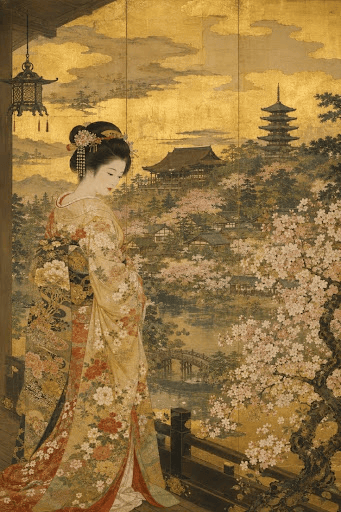
An artistic movement called Orientalism became prominent in Western art during the 19th century, in an attempt to portray Asian and Middle Eastern cultures through exoticized Western fantasies. Asians were not at all portrayed accurately during this period, playing a big role in reinforcing the fetishization that persists today, in which Asian women are sought after for their stereotypical traits such as “cuteness” and “submissiveness”.
These were the very expectations that generations of women have fought hard to challenge. Watching these same stereotypes resurface today as desirable aesthetics is deeply concerning, and it feels as if we are regressing back to the original standards for women.
Senior Stella Soliz said, “While I believe 100 percent in freedom of expression, […] the portrayal of Asian women online as hyperfeminine or overly cute and infantilized […] can contribute to a very stereotypical and one sided view of the population as a whole in the Western world, as well as leading to other problems such as oversexualization.”
Now, the current popular trends associated with cuteness, including Korean “aegyo” (baby-voiced or cute gestures) and Japanese kawaii culture, mirror the traditional standard of femininity, including qualities like obedience, softness, and showing care.
These traits are now being generalized into expectations of how Asian women should look or behave.
“The trend […] has the possibility to undermine or flatten the personalities and complexities of Asian women and girls, and can lead to dehumanization, which is why it’s increasingly harmful, especially during a time where social media such as TikTok and Instagram is so prominent in people’s lives from a young age,” said Soliz.
While many content creators and other viewers online see these trends as harmless forms of self-expression, it really is troubling to see the culture of Asians being reduced once again to such stereotypes, and fetishized for fitting an image of innocence and submissiveness.
Sophomore Isa Sun said, “I don’t blame the women for acting this way; I believe it’s our society and their unrealistic standards and expectations.”
Asian femininity should be viewed through a diverse range of qualities, rather than confined to a single image of cuteness or obedience. Especially in the modern Western context, perceptions of Asian beauty have become extremely superficial and simplified, leaving an eminent issue in society today.
As these outdated stereotypes continue to get romanticized, it is important that Asian women are recognized as their own individuals outside of any one aesthetic.



Leave a Reply