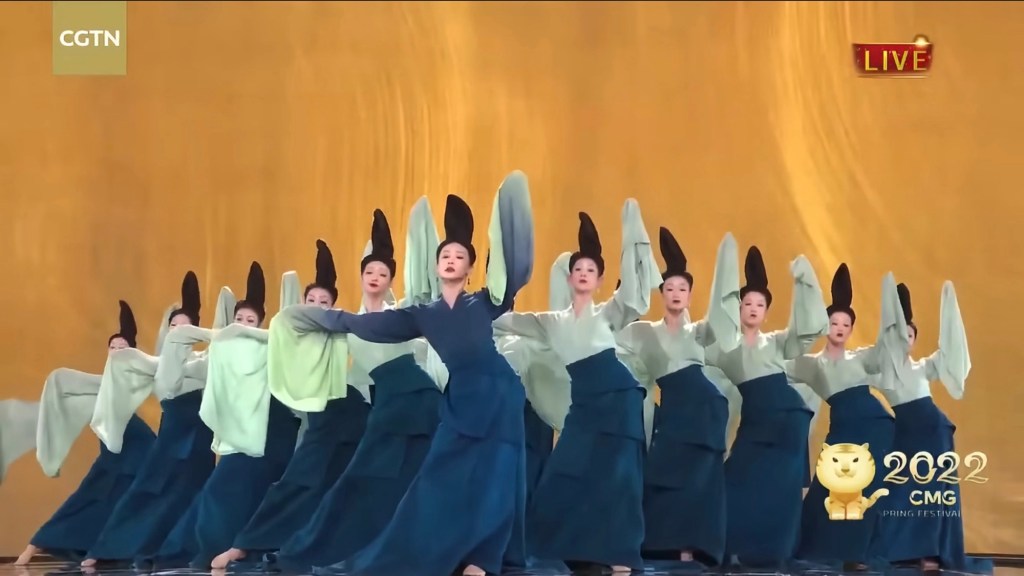
Moving forward from the Zhou Dynasty, we arrive at the Han Dynasty, which lasted from around 206BCE to 220CE. During this time, China expanded westward through Silk Road connections, bringing in new cultural influences, artistic ideas, and forms of entertainment. Unlike the rigid ritual dances of the Zhou Dynasty, court dance in the Han Dynasty became much more theatrical and visually expressive.
One of the most famous dance styles from this era was the Long Sleeve Dance. These performances featured flowing silk sleeves, sweeping circular arm movements, acrobatics, and much more dramatic stage presence, The sleeves themselves became an extension of the dancer’s body, creating wave-like patterns and emphasizing fluidity and elegance.
This is a major shift from the Zhou Dynasty, its movement softer, more expressive, and more visually captivating. Instead of dancers simply representing ritual order, women now became more visible performers within court entertainment.
Femininity during the Han Dynasty became increasingly aestheticized, where beauty, grace, and softness were emphasized much more openly than before. The flowing sleeves created images of fluidity and delicacy, which helped visualize the ideal feminine performer within the imperial court.
However, though women became more publicly visible through dance, that visibility did not necessarily mean freedom nor equality. These performances still largely existed for male imperial entertainment, and emperors often used court dance as a way to showcase the wealth, sophistication, and power of both themselves and the empire.
So compared to the Zhou Dynasty, where women symbolized restraint and social order, Han dynasty dance transformed women into symbols of imperial luxury and artistic beauty. And this shift reflects the larger transformation happening within China itself as the empire expanded, absorbed outside influences, and became increasingly cosmopolitan through the Silk Road exchange.
In the next dynasty, the Tang Dynasty, this openness toward foreign influence and female visibility will become even more dramatic through dances like Dunhuang dance and Central Asian-inspired court performances.
YouTube link to Documentary: https://youtu.be/WqCHEEdvkEc?si=wi9g9WxZ3-NKoY-F
Sources and Media Credits:
Image and Video Footage:
- “Han Dynasty Dance” – Youtube Creator 中国华服日
- Link: https://www.youtube.com/watch?v=gtEROmL0NzQ

 Inquiry in Motion
Leave a comment