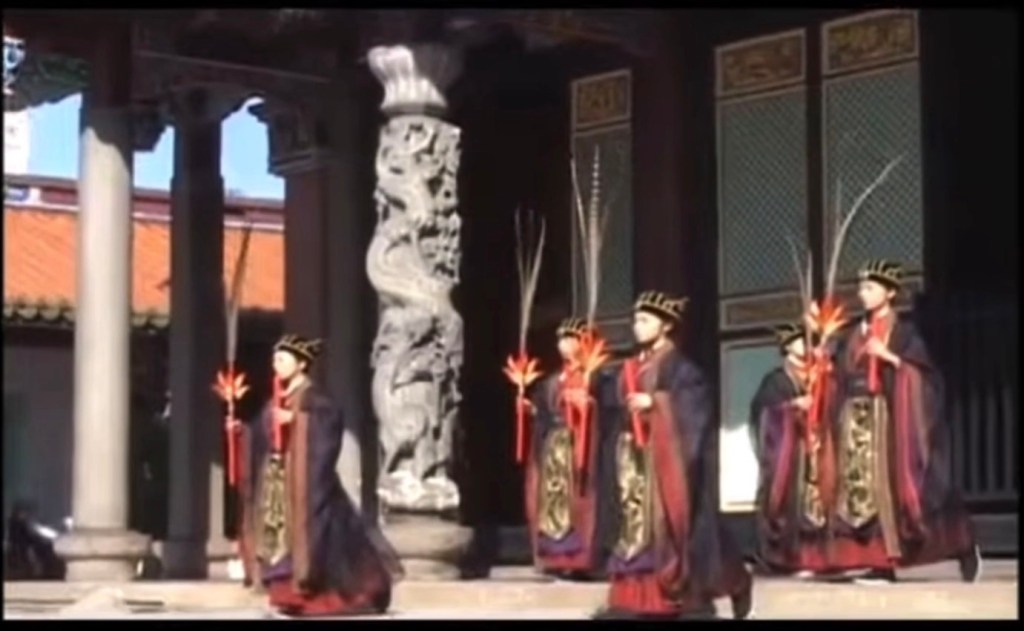
We begin with the Zhou Dynasty, which lasted from around 1046 to 256 BCE.
During the Zhou Dynasty, one of the main forms of court dance was Yayue ritual dance, also known as elegant music. Unlike later dynasties that emphasized spectacle and emotional expression, Yayue was extremely controlled and ceremonial. The dances were performed in symmetrical formations with minimal facial expression and highly precise, regulated movement. Dancers often moved in synchronized patterns, emphasizing collective harmony rather than individuality.
You will be able to notice how restrained and organized the movement is from watching the dance. Nothing is exaggerated or overly expressive. That reflects what was happening socially and politically during the Zhou Dynasty. This was the era where early Confucian ideals and strict social hierarchy became deeply influential in Chinese society.
Women, especially in elite settings, were expected to embody modesty, obedience, restraint, and harmony. So these female dancers weren’t really meant to express personal emotion or individuality. Instead, their bodies showcased the order and disciplined morality implemented in that era. The dance itself reflects how tightly controlled women’s social roles were during this period.
This symmetry and uniformity of Yayue ritual dance mirrored the Zhou Dynasty’s belief that society functioned best when everyone stayed within their assigned role and maintained social balance.
As we move into later dynasties, especially the Han and Tang dynasties, women will become much more visible and expressive in court dance, reflecting the major cultural and political shifts happening across China.
Youtube Link to Documentary: https://youtu.be/zq14AV9k2Rc?feature=shared
Sources and Media Credits
Image and Video Footage:
- “Confucian Ritual Dance and Music in Taiwan (Yayue)” – YouTube creator Yєu Ɲgนุуєท
- Link: https://youtube.com/watch?v=paBWJ3pkRmE&si=QXKBh20I9bqQC-0c

 Inquiry in Motion
Leave a comment