History is often read through dynasties, wars, laws, and political leaders. Yet another archive exists: movement. Dance preserves cultural values in ways texts alone sometimes cannot. The posture of a body, the width of a sleeve, the force of a gesture, and the social role assigned to a performer may reveal assumptions about gender and power. Rather than proving historical realities directly, dance can be interpreted as a cultural record—one that reflects changing social ideals. Across Chinese history, evolving expectations surrounding womanhood and masculinity became embodied in dance characters, costumes, and movement styles. From the cosmopolitan confidence associated with the Tang court to the revolutionary heroines of the Cultural Revolution, performance became a lens through which changing gender roles can be studied.
Tang Dynasty: Expansive Bodies and Visible Women
The Tang Dynasty is frequently described by historians as one of the most internationally connected periods in Chinese history. Through Silk Road exchange, court culture absorbed influences from Central Asia and beyond. Historians often note that elite women in the Tang period occupied relatively visible social positions compared with many later dynasties. Women appeared in horseback activities, musical life, and elite public culture with greater openness than later Neo-Confucian periods.
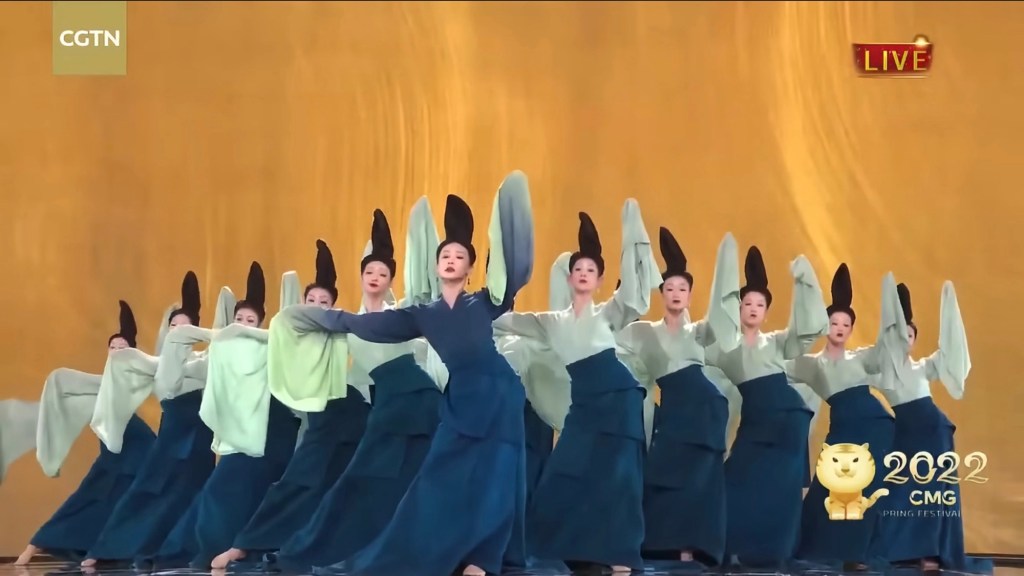
Tang-inspired dance aesthetics appear to reflect this atmosphere. Costumes are often reconstructed with broad sleeves and layered garments creating wide, flowing movement. Female dance characters frequently occupy space with upright posture and expansive arm patterns. Instead of emphasizing concealment or restraint, movement can appear outward and socially visible.
Dance cannot be treated as a direct mirror of everyday life; however, these bodily aesthetics suggest a society that could imagine femininity as expressive and publicly present.
Song and Later Imperial Periods: Refinement and Restraint
During the Song Dynasty, Neo-Confucian philosophy had a growing influence on ideas about moral behavior as well as family roles and expectations for women. Historians often point out that people placed more importance on modest behavior while encouraging self-control and a restrained image of femininity.
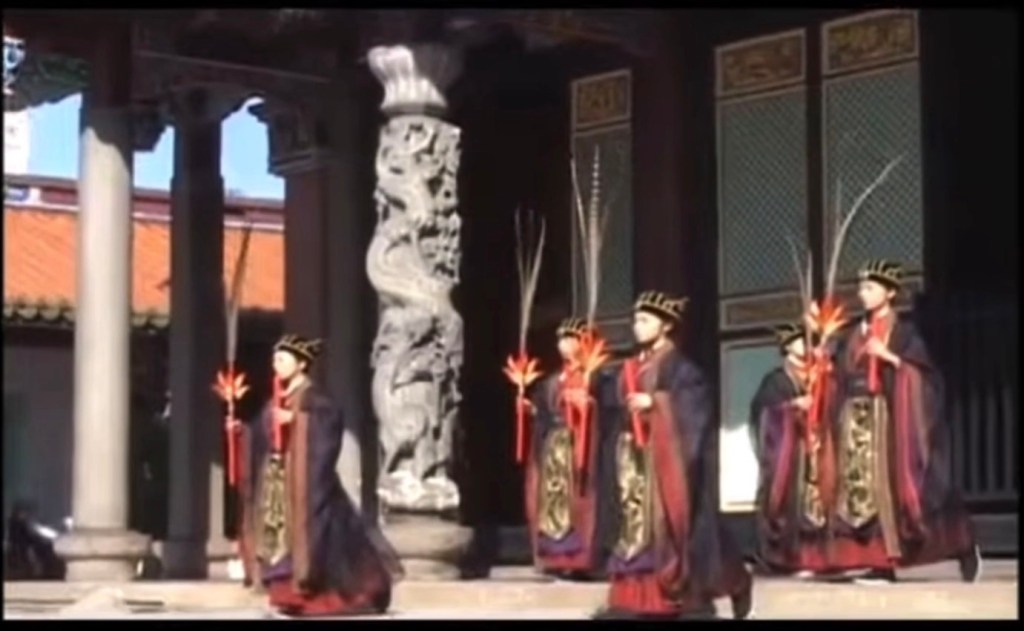
Performance aesthetics gradually shifted as well. Dance and theatrical forms increasingly valued precision and control. Costumes often visually narrowed the silhouette, and movement emphasized refinement over spatial expansion.
The idealized female body presented in artistic culture increasingly reflected social expectations surrounding restraint. On stage, the body wasn’t just a decoration anymore. It became a reflection of culture.
Rather than claiming that dance caused social norms, it may be more accurate to view performance as participating in broader conversations about acceptable femininity.
Cultural Revolution: Revolutionary Bodies and New Heroines
While the Chinese Cultural Revolution transformed politics, it more importantly constructed cultural production itself. Existing traditions were criticized and remade through revolutionary ideology. Scholar Emily Wilcox’s work on Chinese dance argues that movement traditions cannot be separated from larger political and social transformations. Her research demonstrates how dance bodies became sites where new social ideals were created and performed.
During the Cultural Revolution, traditional court heroines and literary women increasingly gave way to revolutionary protagonists: workers, soldiers, and political activists. Costumes shifted dramatically. Silk robes and flowing sleeves frequently yielded to military uniforms and practical clothing. Soft visual lines became sharper and more angular.
Posture changed as well.
Bodies widened. Chests lifted. Feet grounded into powerful stances. Arms projected outward with force rather than inward with delicacy.
Perhaps most strikingly, female movement increasingly adopted physical vocabularies traditionally coded as masculine. Revolutionary heroines marched, leapt, wielded weapons, and occupied stage space with authority.
Yet this shift presents a complicated historical question. Revolutionary dance expanded representations of women by granting political and heroic visibility. At the same time, some scholars argue that revolutionary aesthetics replaced older expectations with new collective ideals rather than fully liberating individual identity.
Conclusion: Bodies as Historical Archives
Across Chinese history, changing gender expectations altered many ideals surrounding movement itself. The expansive sleeves of Tang dance, the refined bodily discipline of later imperial periods, and the powerful revolutionary heroines of socialist performance each reflected different visions of womanhood.
Dance therefore should not simply be viewed as entertainment.
Performance can function as a historical archive.
Bodies remember what societies ask people to become.
⸻
Selected Academic References
Revolutionary Bodies: Chinese Dance and the Socialist Legacy (open-access scholarly book) — Emily Wilcox, University of California Press. Widely cited foundational English-language scholarship on Chinese dance history.
Revolutionary Bodies overview — OAPEN academic library entry with publication details.
SanSan Kwan (SanSan Kwan), review in Theatre Survey, argued the book fills a major gap in English-language Chinese dance historiography.

 Inquiry in Motion
Leave a comment